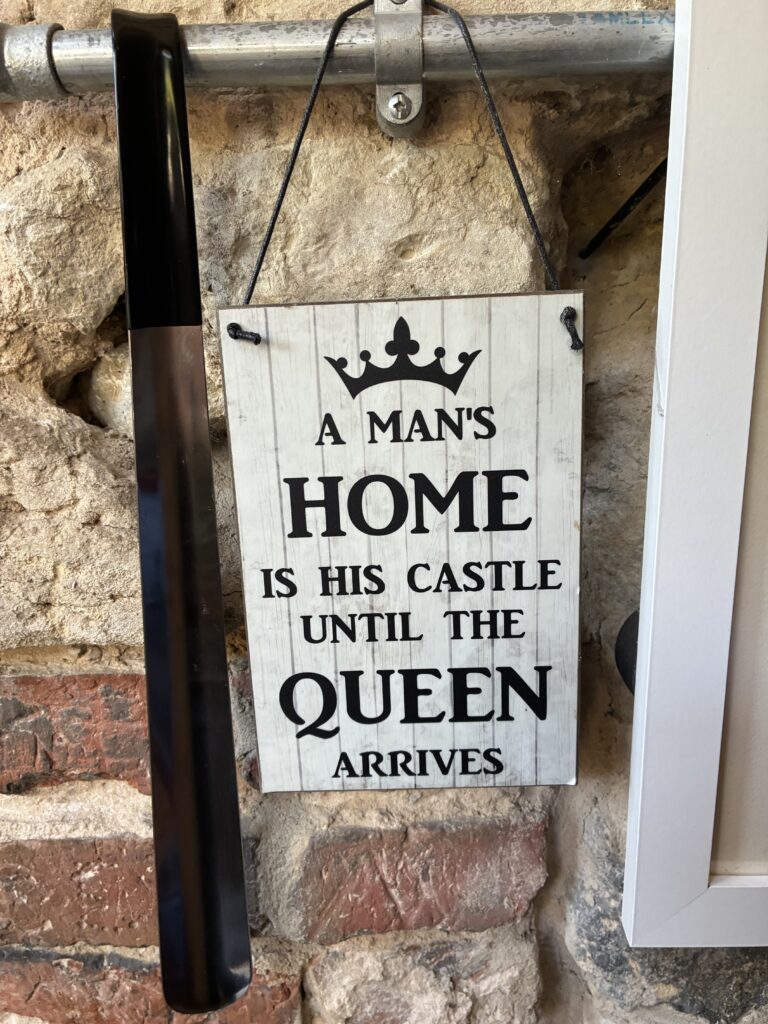
Recently I visited my friend Dave in Oxford for the weekend. He was working on some deer hide, so I had the pleasure of helping him shed the skins, and prepare the bark liquor for tanning. On top of that, we sourced some spring water in the secluded Egyptian Well near Lower Hartwell. On the way back, we had a serendipitous stop at Dinton Castle, one of the smallest and most unique miniature castles in the world.
But what got me thinking the most was the two chess games and that one game of Backgammon we played, both of which I lost.
The common adage says that life is a game of chess, and that every move we play has far-reaching impacts later on. But is it really a game of chess?
Dave also told me about card counting and the many encounters he had at the casinos on his recent trip. That also made me think of the usual metaphor ‘hand you’re dealt’. It suggests that randomness happens once, at birth, and afterwards you simply play your hand.
Is that the whole picture? I don’t think so.
I believe that a better metaphor for life would be a multiplayer game of backgammon. This is a game of strategy and luck, and the objective is to move all 15 of your checkers around the board and then bear them off.
The players roll the dice before making the moves based on the outcomes of the rolls, every step of the way.
Life is not chess because chess implies a fixed starting position with equal pieces, and the outcome is largely determined by deliberate decisions. But just look around, life for each of us begins with radically different and unequal starting conditions, and there’s an insurmountable amount of uncertainty.
We’d like to think we are dealt one hand at the start, yet the dice keep rolling from dawn to dusk, from the comfort of our mother’s embrace til our final breaths.
Just like every turn in the game of backgammon.
Before we even make our first decision, countless things have been determined for us.
We don’t choose our parents, we don’t choose where and when we are born. We don’t have a say in our family’s circumstances, we don’t toggle our level of wealth at birth. Our early education and upbringing are not up to us, our health is governed by the nutrition or lack thereof that we get or miss.
You know people say we inherit our parent’s genes, but that’s not the whole picture. Our parents’ genes are recombined and reshuffled when we are conceived. Each of us receives a particular combination of genetic variants that your siblings may receive differently.
Consequently, exceptional parents don’t necessarily produce exceptional children, and relatively ordinary parents can produce children with unusually advantageous traits. That’s regression to the mean at play.
On that note, I am still amazed by my unique intelligence and processing power in comparison to my parents.
Looks matter, and they always have, even if we don’t like to admit it. Our physical traits such as appearance, height and athletic ability are influenced by complicated interactions between many genes and the environment. So too are our psychological traits influenced by complex combinations of genetics and environment.
That’s already multiple dice rolls.
Some may hold a more epigenetic view of humanity. Perhaps our DNA doesn’t mechanically dictate exactly what we become.
Sure environmental factors as well as various epigenetic processes account for how our biological traits get activated.
But that’s still a dice roll we don’t truly have control over. So these are most of the rolls that will act as compound interests for some, and resemble an exponential half-life for others.
Every day is a new beginning, a new day. But it doesn’t guarantee a good day. The God of randomness can bestow upon us a favourable wind, or sink our boats and destroy all that we’ve built.
Except that God could be another player. Maybe we meet our soulmate. Or someone gives us a unique opportunity.
Or you can lose your job because the boss doesn’t like you enough. Or you get robbed by strangers on the street.
It’s like having one of your checkers being captured and sent back to the starting point in backgammon.
There are billions of other players, each trying to reach the goal of putting all 15 checkers into the home board. What that entails is different for each of us, but the common denominators are resources, mating opportunities, and perhaps power and fame.
I think most of us aren’t actively trying to sabotage others, but inadvertently in the process of fulfilling our very own home boards, we will directly or indirectly hinder the progress of others. We might even sabotage their whole game, in an attempt to get further.
It’s not exactly zero-sum, but it sort of is.
On the flip side, we can create opportunities for ourselves and others. We can work together as small groups and reach our home boards quicker.
Of course, the reality is tremendously more complex and intricate. There are too many variables to account for.
I suppose the individual solution is to keep going, and using what we have at our disposal to foster better outcomes for our lives.
On the macro scale, we should create a society where even the lowest ranking members can lead fulfilling and meaningful lives. It’s easier said than done, but I believe that’s a goal we should strive towards.
Right?
As a young man, most of us are all just trying to get love and achieve a livelihood where we can eventually start our own families.
Unfortunately, the current socio-economic landscape of the world has turned it into an uphill battle.
We are probably the first generation to suffer from an employment and relationship recession.
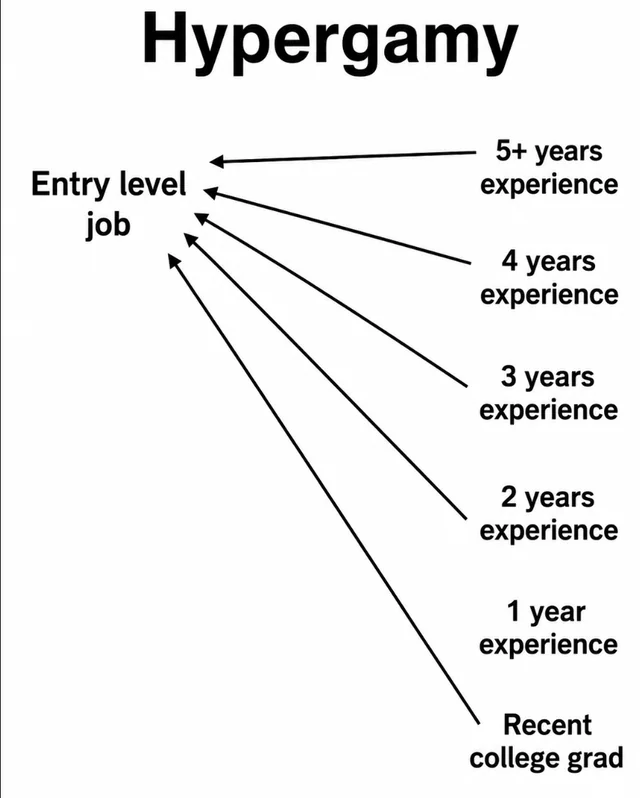
Hypergamy is no longer about the average man being undesirable to the average woman, it extends into the realm of employment, where the average worker cannot secure an average job to save their lives.
I am not a defeatist. So I encourage many others and myself to seek unconventional ways to survive. We just have to think outside the box and do whatever it takes, despite the odds.
Society must address this pressing issue with urgency and the attention it deserves, otherwise the eventual collapse will happen sooner than anticipated.