

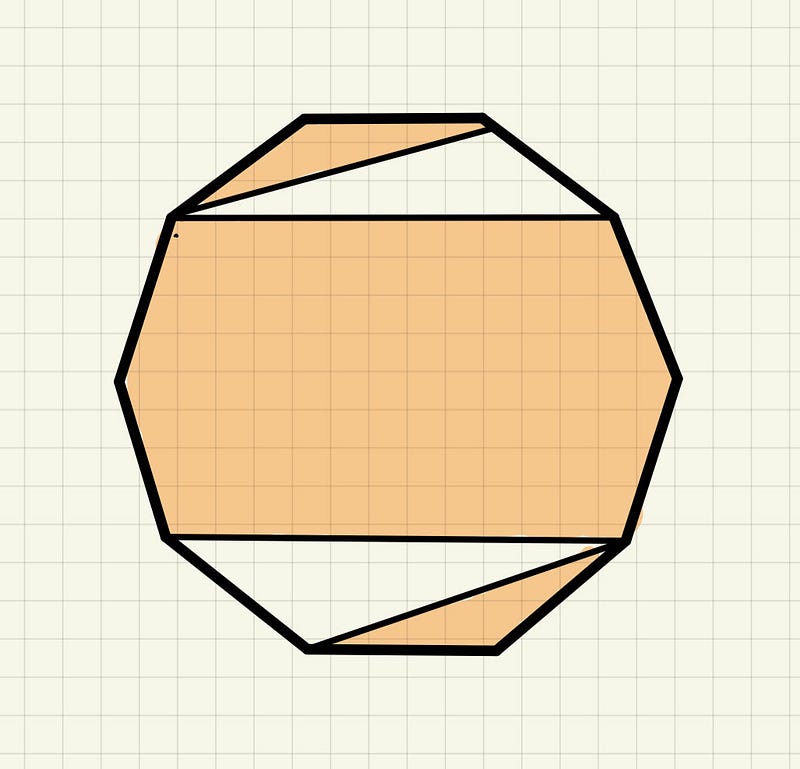
What fraction of this regular decagon is shaded?
Give this problem a try before jumping in for the solution!
Solution: Brute Force
The first solution is done with trigonometric functions. We first let each side length of the decagon equal 1. We then add two straight lines as shown below.
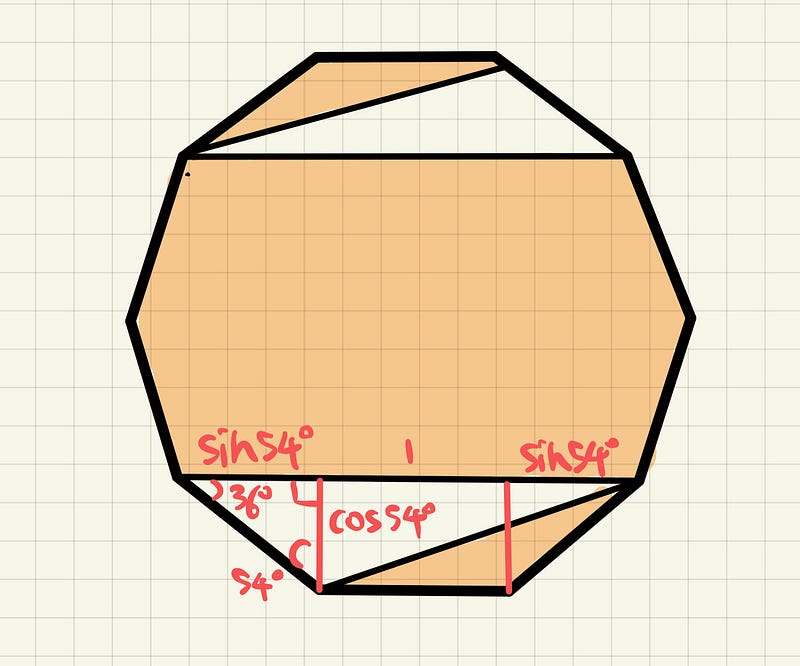
The size of the angles can be found using the formula for the sum of the interior angles of an n-sided polygon divided by n. Using trigonometric ratios gives us the total lengths of the base and the height of the triangle
The total area of two unshaded triangles:

The area of a decagon with side length 1:
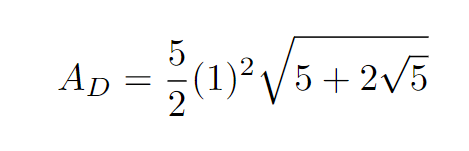
Therefore the fraction which is shaded:
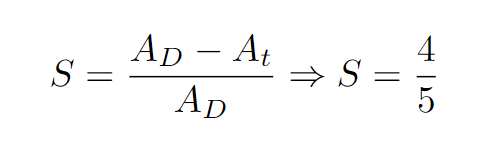
Try and confirm the answer with your calculator!
Solution: Elegance
We will construct our diagram by adding extra lines as below.
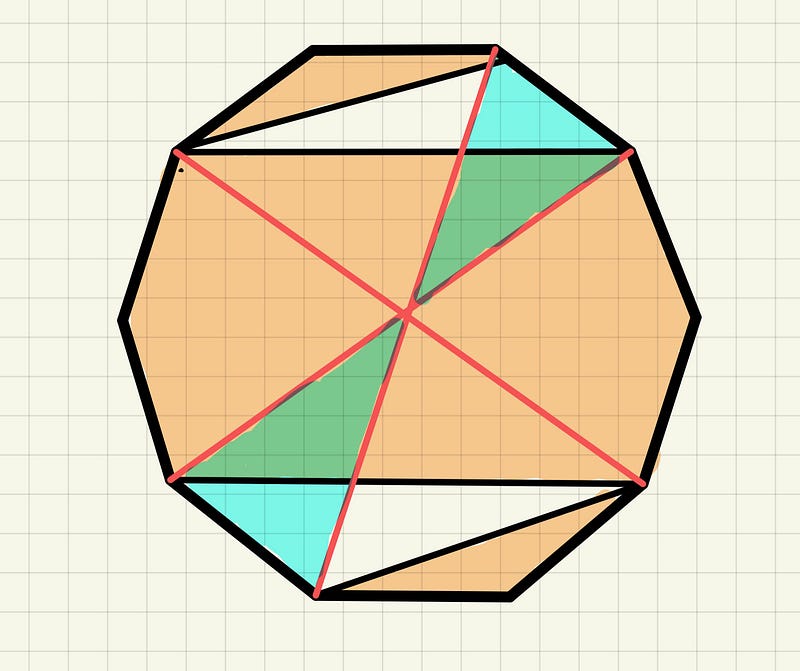
By sliding the tip of the two unshaded triangles along the diagonal, we can clearly see that they are two of the ten triangles that make up this regular decagon.
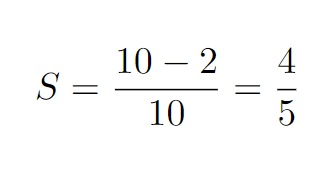
Therefore the shaded part:
Epilogue
In mathematics, there are generally two ways of solving problems.
One that uses shortcuts and geometrical properties to great depth. We call it elegance.
Another one is the brute force method. We use trig functions or proof by exhaustion.

In our example, the first solution is a classic brute force solution in geometry as it requires the use of trig functions in calculators. The second solution is elegant since additional lines are drawn to help find clues.
Do we live elegantly, or do we brute force our way through life?