

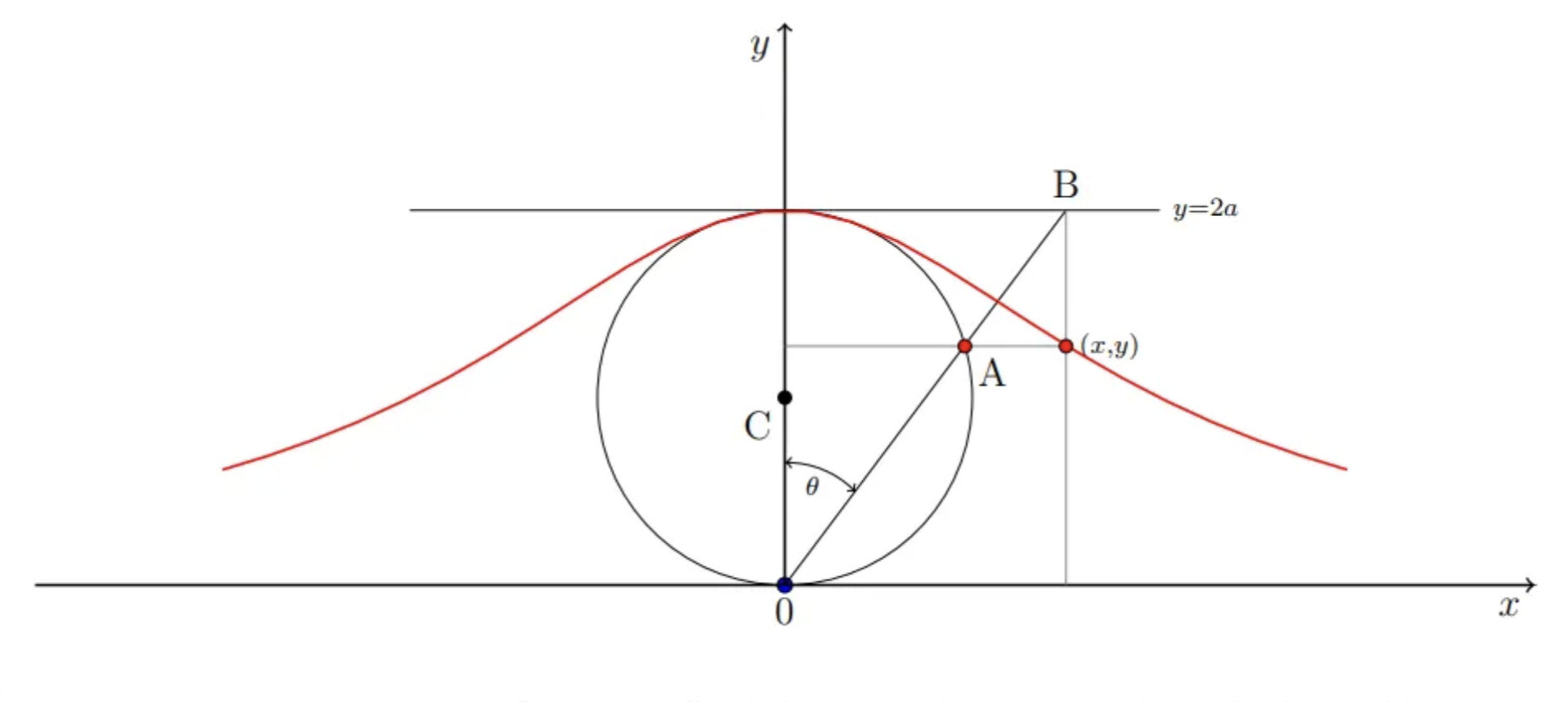
This is the Witch of Agnesi, a bell-shaped mathematical curve named after the Italian mathematician Maria Gaetana Agnesi, famous because its strange name comes from a translation error.
If you are brave enough to solve the challenge, read on!
Construction and Challenge
The figure above shows a circle of radius a centered at the point C = (0, a).
The points (x, y) are obtained as follows: draw a line from the point O = (0, 0) to any point on the line y = 2a.
Denote this point by B. The line drawn intersects the circle at the point A.
Draw a horizontal line through A and a vertical line through B.
The point where these two lines intersect is the point (x, y).
Can you find the area between the witch and its asymptotic line? That is the area between the red curve and the x-axis?
Part 1: Parametric Equations
To compute the required area as an integral, we first need to find the parametric equations for points (x, y) in terms of the angle θ, where θ is the angle between the positive y-axis and the line OB.
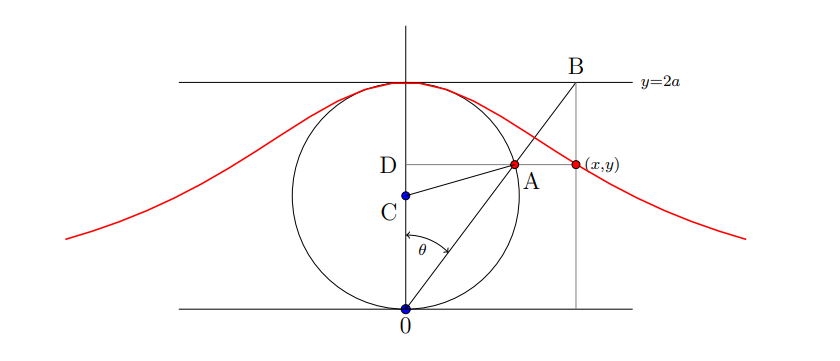
Notice that the diameter of the circle is 2a.
The radius, from the origin to C, is therefore a. For an arbitrary point y on the red curve, its length is a plus the length of CD.
What is CD in terms of a and θ?
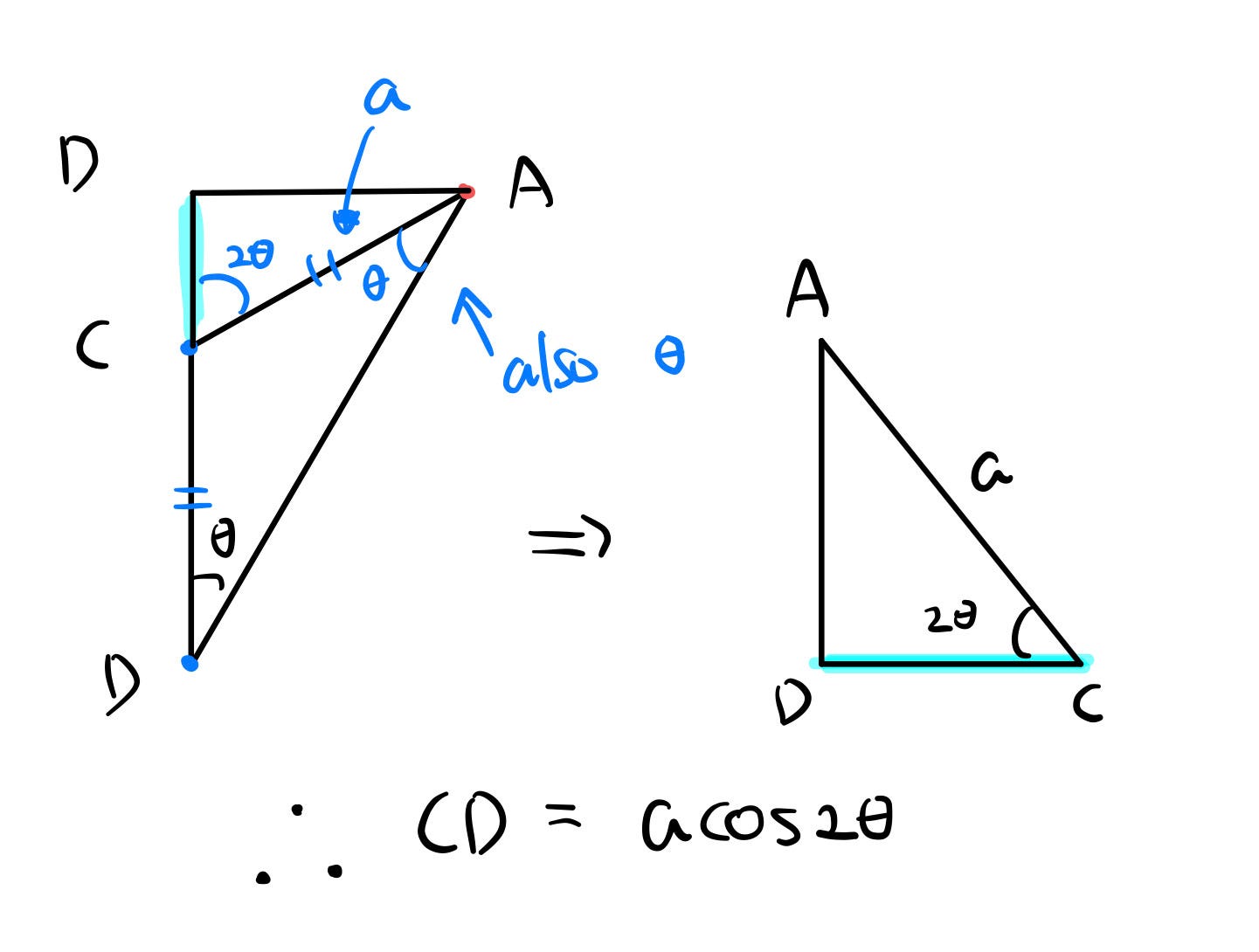
Therefore, the y-coordinate can be parametrized into the following.
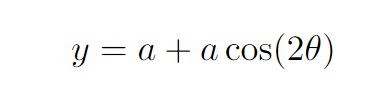
What about the x-coordinate?
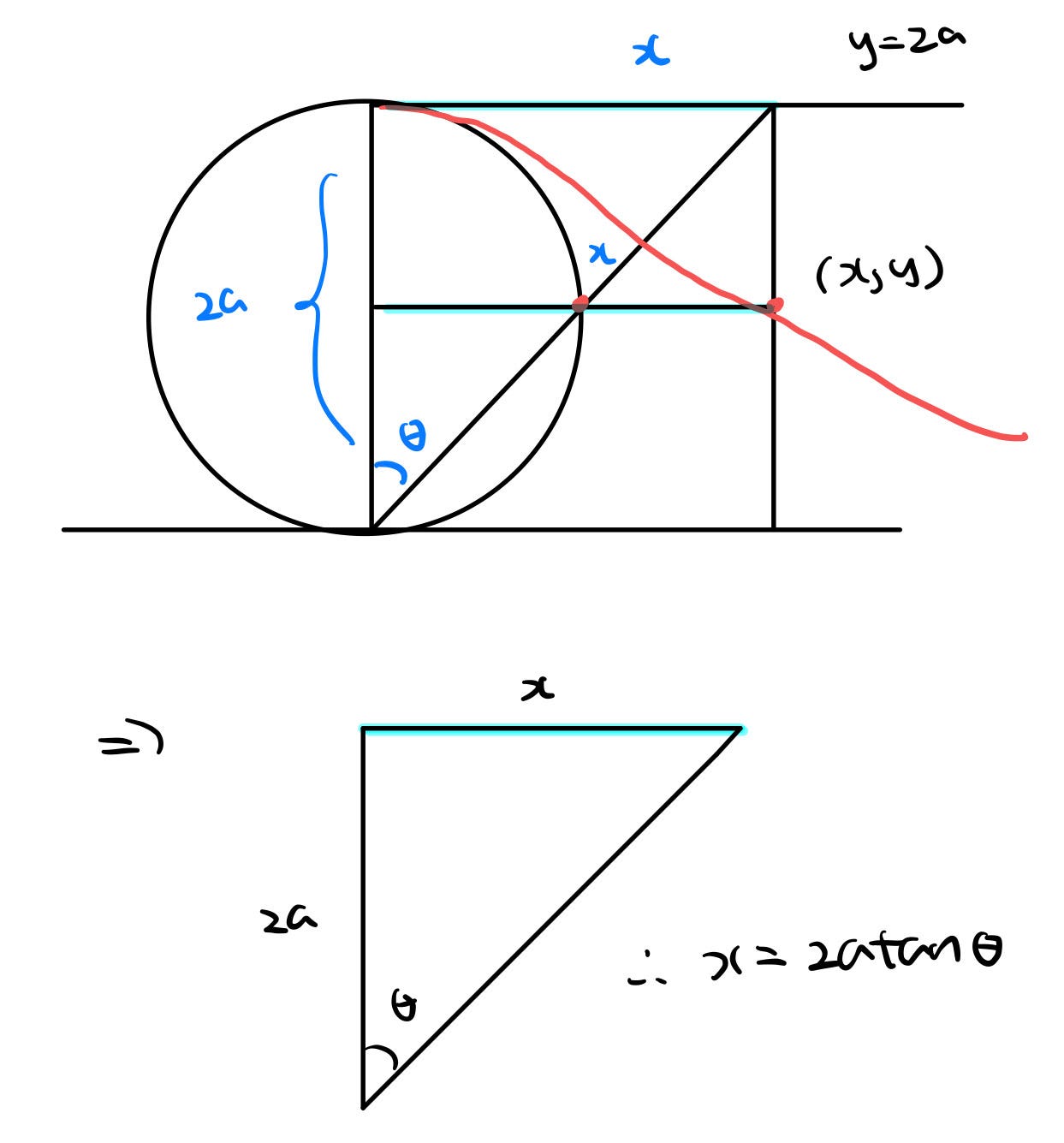
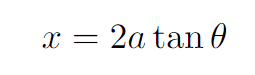
Therefore, the x-coordinate can be parametrized into the following.
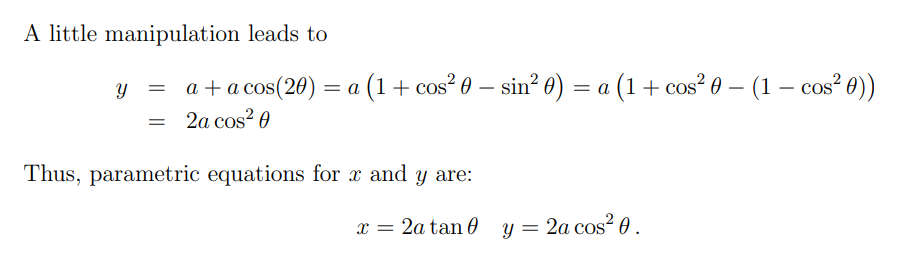
We can further manipulate our expression and arrive at the following parametrization.
Part 2: Solving for y
In order to represent the area as an integral, we want to establish a function y in terms of x based on the parametric equations above.
We first start by manipulating x.
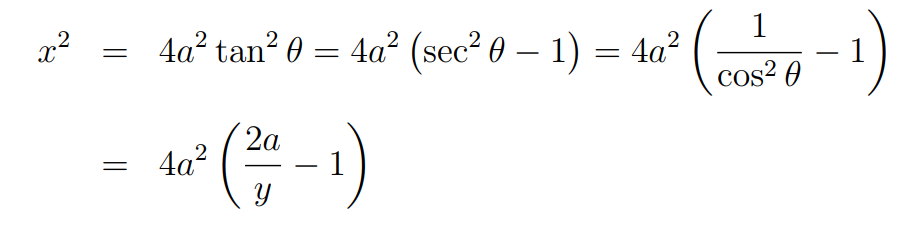
We then solve for y, giving us the following.
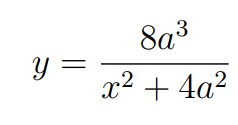
Part 3: An Improper Integral
As the area extends from negative infinity all the way to positive infinity, we set up the following integral.
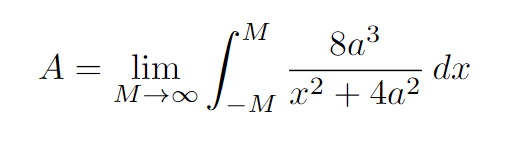
Try and compute this integral yourself before reading on!
To solve for this integral, we start with the following substitution.
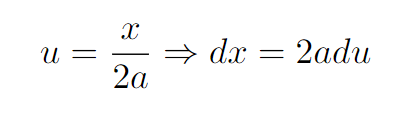
Upon substitution, we transform our integral into the following.
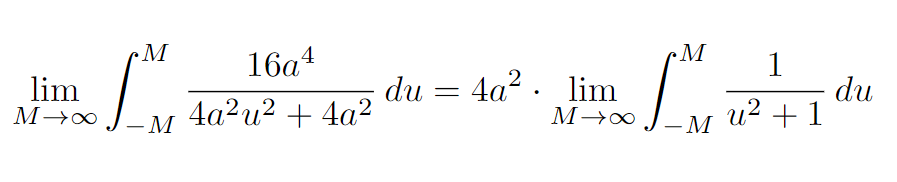
We have simplified the fraction and taken out the factor 4a².
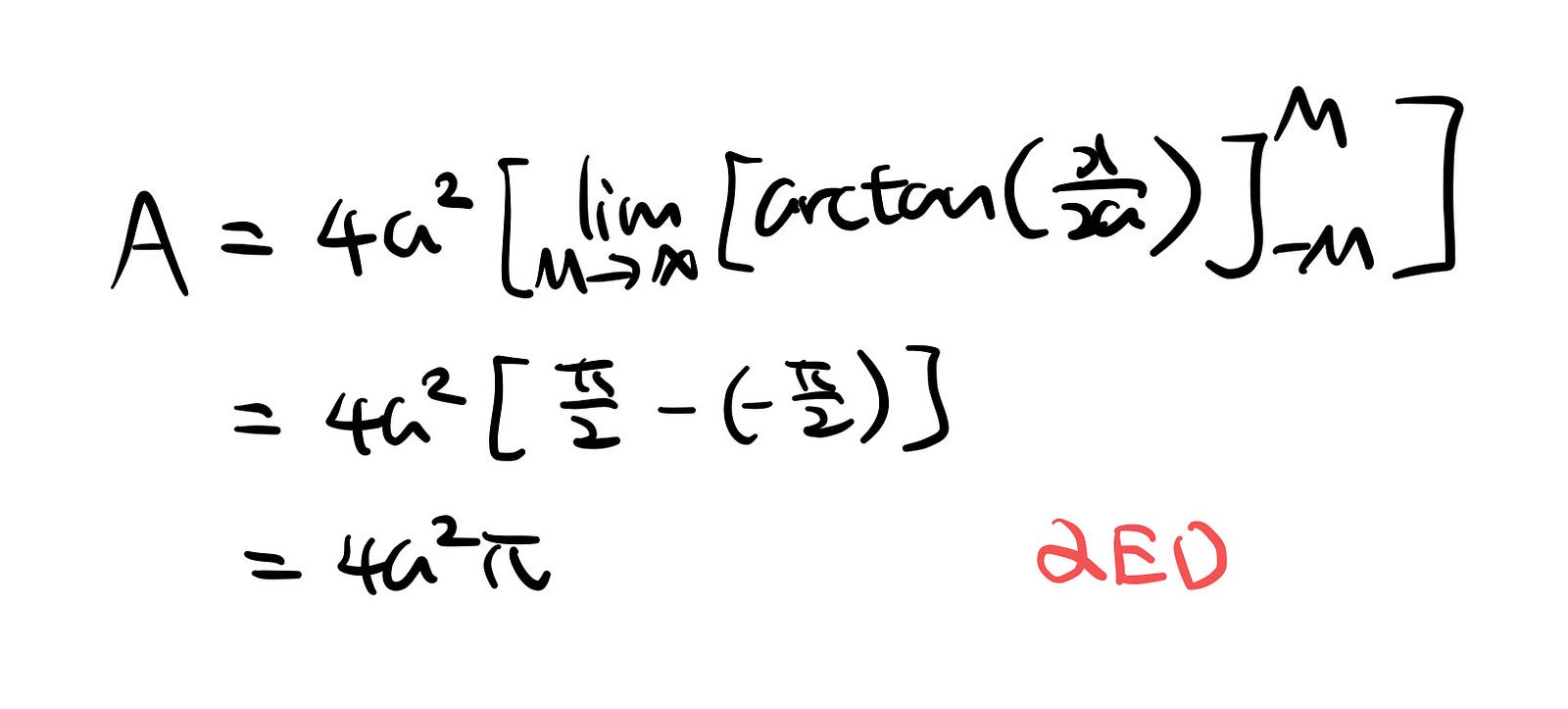
And that’s a good place to stop.
(Check our the graph of arctan(x) to evaluate the limits!)
And that’s our answer. How amazing. Hey, don’t forget to clap👏 the article as a token of appreciation. Thank you 🦁