
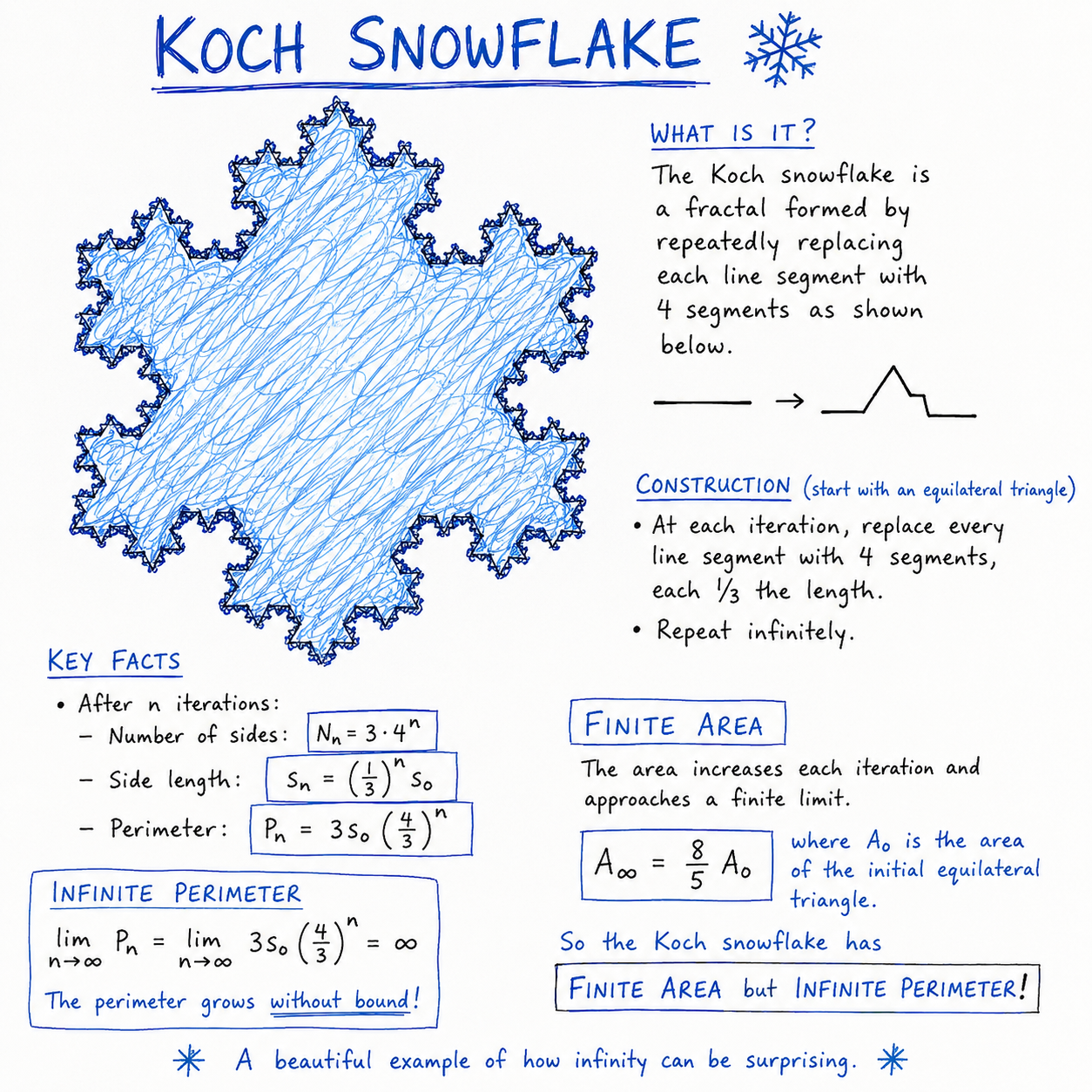
Following part one of the series, we will now look at the area of a Koch snowflake starting with an equilateral triangle with a side length of 1.
Give the problem a try before jumping in for the solution!
Area
Let’s look at what happens in the first iteration
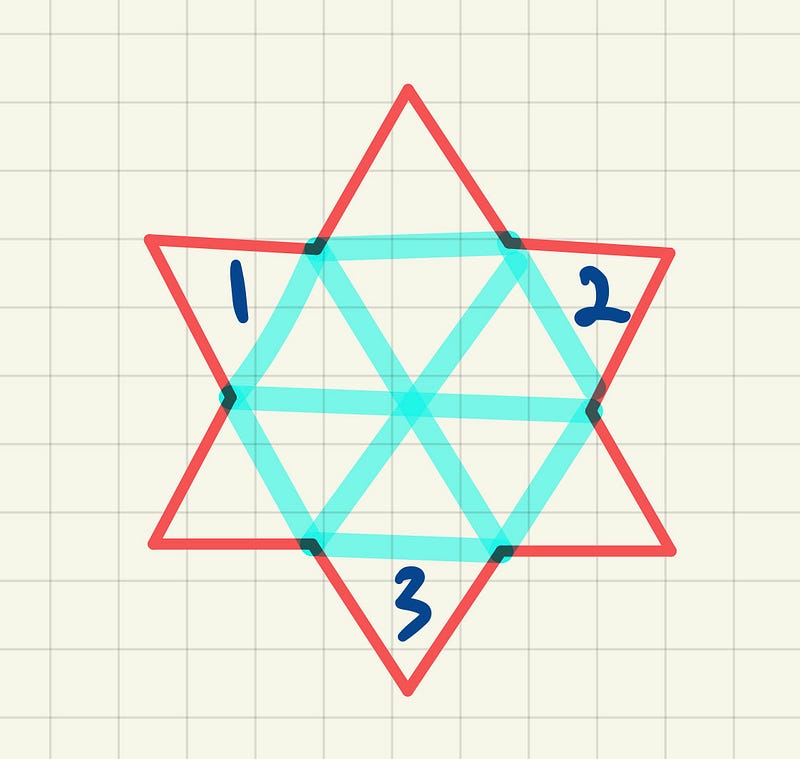
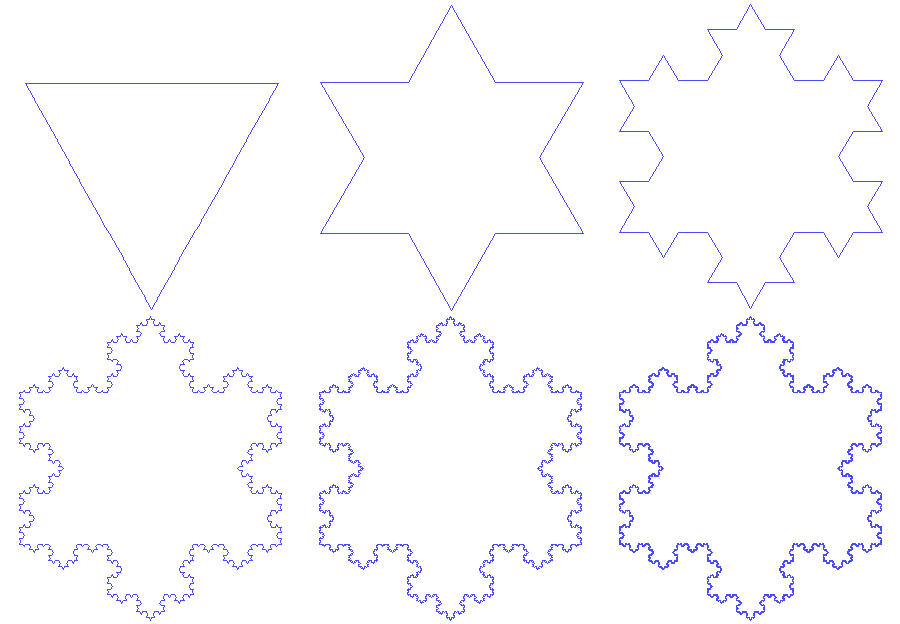
We are adding one new triangle for each edge as shown in 1, 2 and 3.
In general, for the nth iteration, we add n number of triangles equal to the number of edges in the previous step, that is step (n-1).
If we draw the figure for the second iteration, we will find the following pattern.
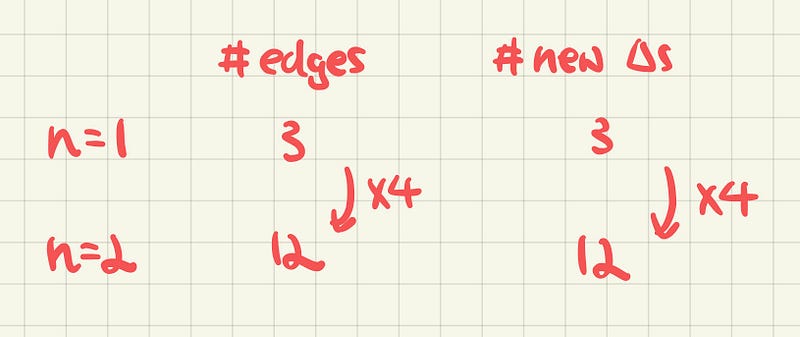
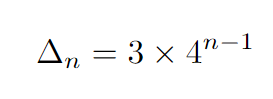
The number of triangles gets multiplied by 4 at each iteration. As the initial number of triangles is 3, we can conclude that at the nth iteration, the number of triangles added is
So what does the number of triangles added at each iteration have to do with the area? The key here is to figure out the area of the new triangles added at each step.
Because the area of the triangles added at the nth stage differs from the area of the triangles added at the previous stage, the goal here is to find out the relationship between their areas.
To do this, we consider the first and the second iterations.
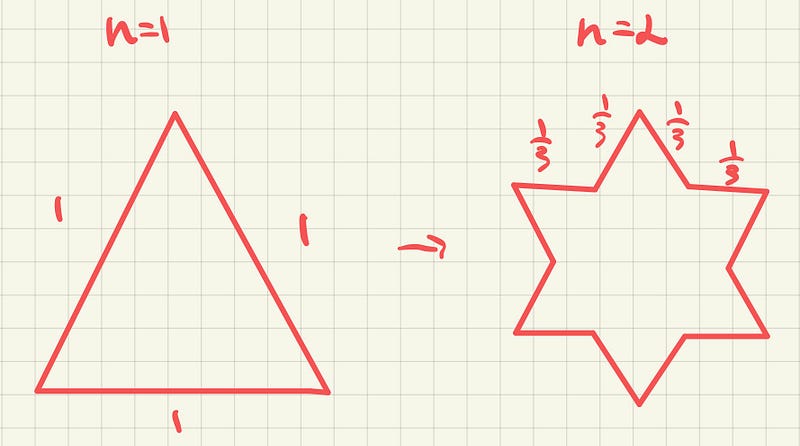
As we can see, the side lengths of the triangles in the second iteration are 1/3. The triangles that have been added therefore have an area of
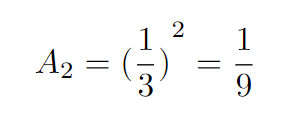
In general
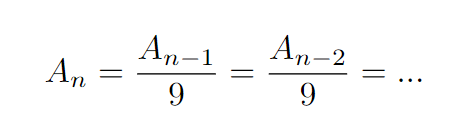
This means that the area of the triangles added at step n is 1/9 the area of the triangles added in the previous step. This pattern continues up to
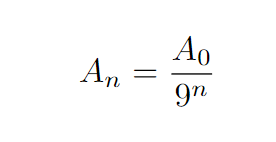
where A0 denotes the area of the original equilateral triangle.
As we now have the relationship between the area of the triangles added at step n with the starting area of the first triangle, we can use this formula and the formula for the number of triangles added at step n to find out more about the total area.
The total area added at the nth step must be equal to the product of the two
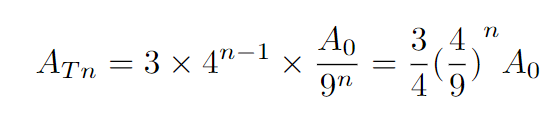
To find the total area of the Koch snowflake, we have to find out the sum of the triangles for different values of n up to infinity.
Mathematically, the area of the Koch snowflake at the nth iteration is the sum of A0 (the original triangle) plus the geometric series formed above

The highlighted part is simply a geometry series and since the Koch snowflake is formed as n goes to infinity, we have
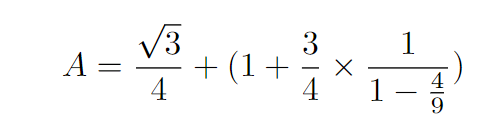
Finally, we arrive at
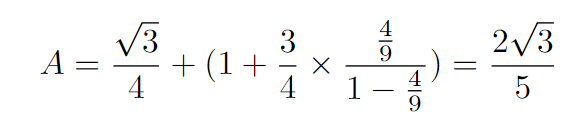
So the area is finite!