
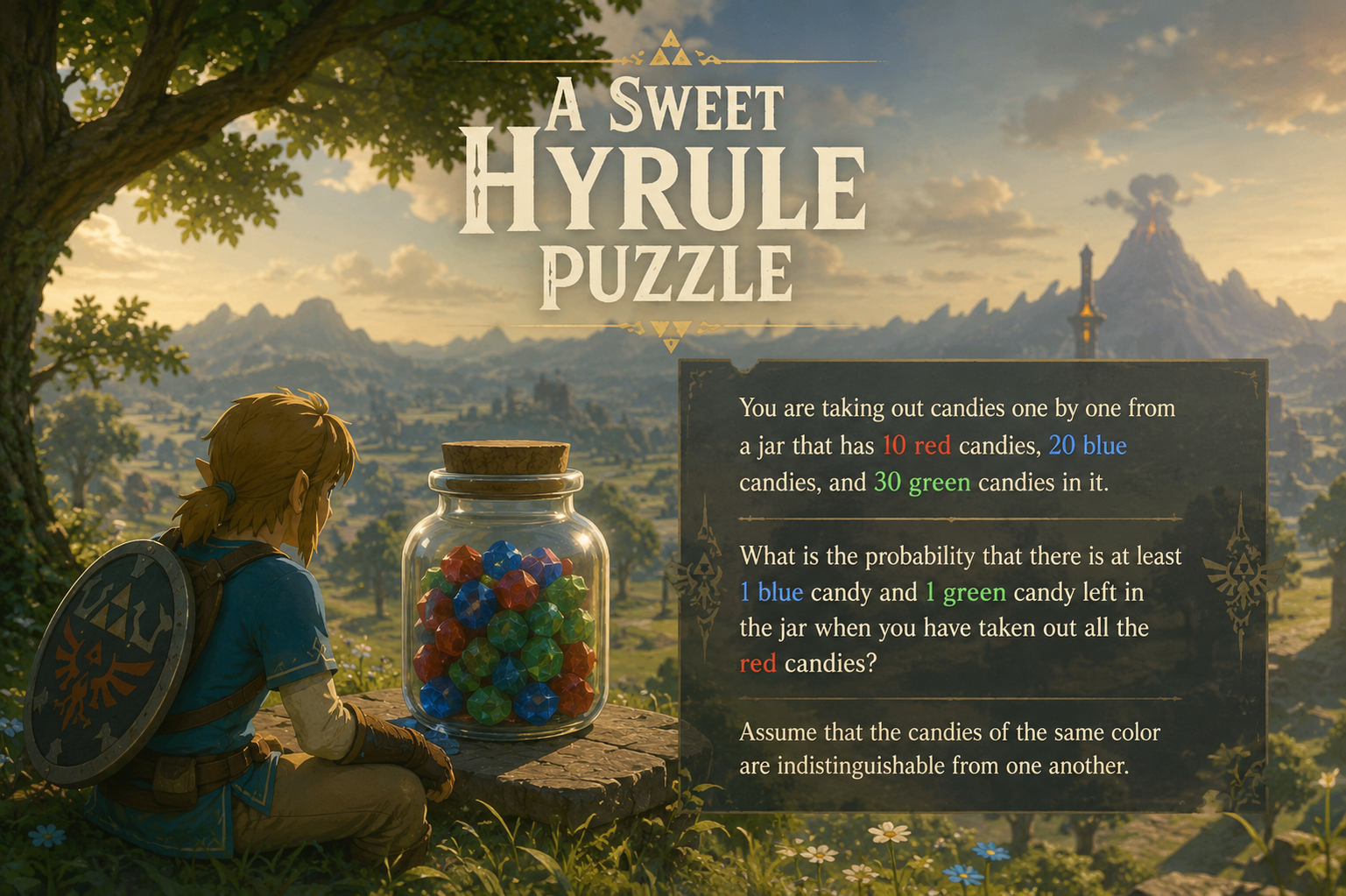
The prompt I used to generate this image on ChatGPT is “generate a Zelda breath of the wild inspired blog cover image for this maths puzzle”.
Clearly if you are still manually creating math puzzle images, it’s akin to using a spoon to dig a hole when you have a shovel.
You are taking out candies one by one from a jar that has 10 red candies, 20 blue candies, and 30 green candies in it.
What is the probability that there is at least 1 blue candy and 1 green candy left in the jar when you have taken out all the red candies?
Assume that the candies of the same colour are indistinguishable from one another.
Once again, this is a good moment to pause the article and give the problem a go yourself. When you’re ready, keep reading for the solution. And if you come up with your own approach, feel free to share it in the comments — I’d love to see how you tackled it.
Don’t forget to subscribe to our YouTube channel for more maths puzzles, it’s my goal to reach 100k subscribers someday.
Solution
We will begin by considering the complete sequence of 60 candies.
Any scenario that satisfies the given question will match one of the following two:
- The 60th candy in this sequence is green, and some blue candy exists before this and after the last red candy.
- The 60th candy is blue, and some green candy exists before this and after the last red candy.
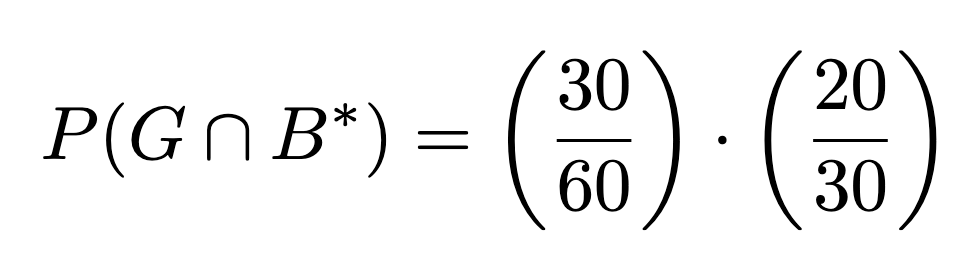
In the first scenario, let G be the event that the 60th candy is green. Let B* be the event that there is a blue candy before that but after the last red. Since these two events are not independent, we want to calculate:

P(G)=30/60 because the 60th candy will be one of 30 greens, and there are a total of 60 choices.
P(B∗∣G) is the probability of finding a blue candy after the last red, given that the 60th candy is green.
Now remove all green candies from consideration, there are 30 candies (10 red & 20 blue).
Imagine a random sequence of these 30 candies (it might be scattered anywhere from position 1 to 59, but still, it is a random sequence of 30 candies only). The probability that the 30th one of these is blue is 20/30.
Thus, we have
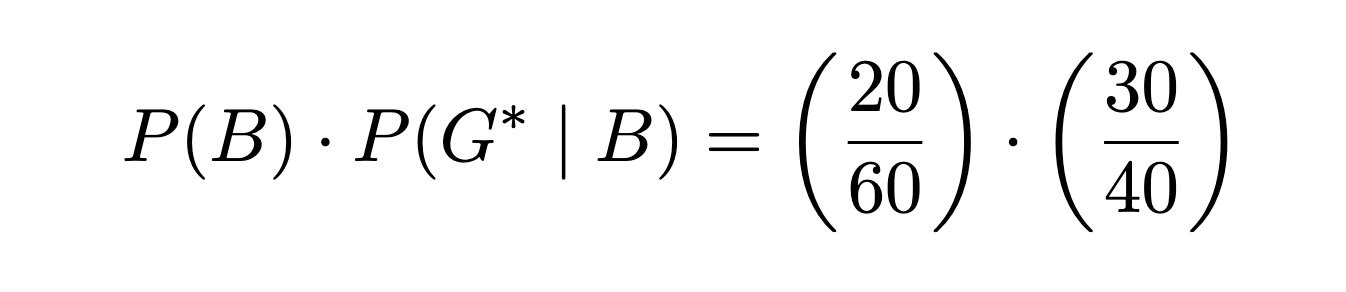
Similarly, for the second scenario, let B be the event that the 60th candy is blue and let G* be the event that there is a green candy before that but after the last red.
We want to calculate
Since these two scenarios are mutually exclusive, the probability of union is the sum of these probabilities.
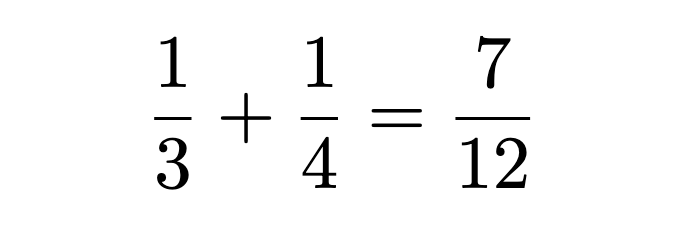
And that’s our answer. How amazing. Hey, don’t forget to clap👏 the article as a token of appreciation. Thank you 🦁