

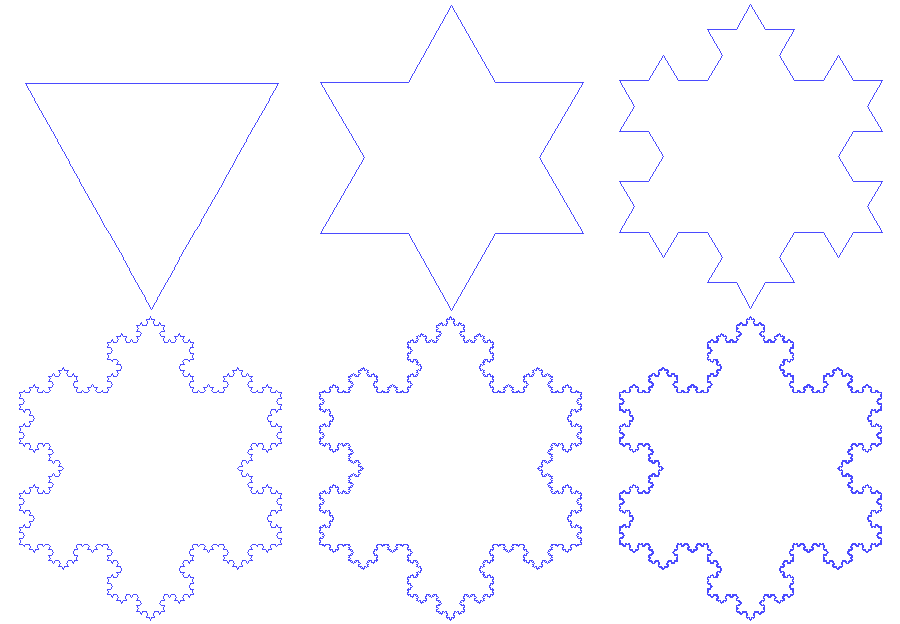
What is the perimeter of the above Koch snowflake starting from an equilateral triangle with side length 1?
This is part one of a two-part series on Koch snowflake. Stay tuned for the next post on finding the area!
Give this problem a try before jumping in for the solution!
Introduction
The Koch snowflake is one of the earliest fractal curves to have been described in mathematics.
It starts with an equilateral triangle and creates three smaller equilateral triangles using the middle third of each side as a base. It then removes the base of the triangle. The process iterates an infinite number of times, resulting in what’s known as the Koch snowflake.
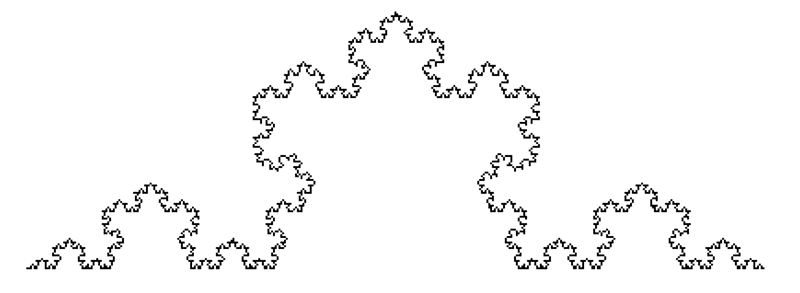
Perimeter
The key to breaking down the problem is to consider what happens at each individual iteration.
To find the perimeter, we start by considering one side of the original equilateral triangle with length 1.
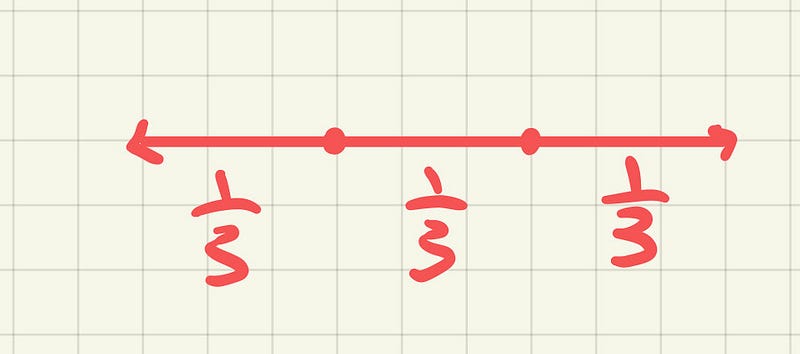
The second step is then to remove the central piece and add in two other lines each with length of 1/3
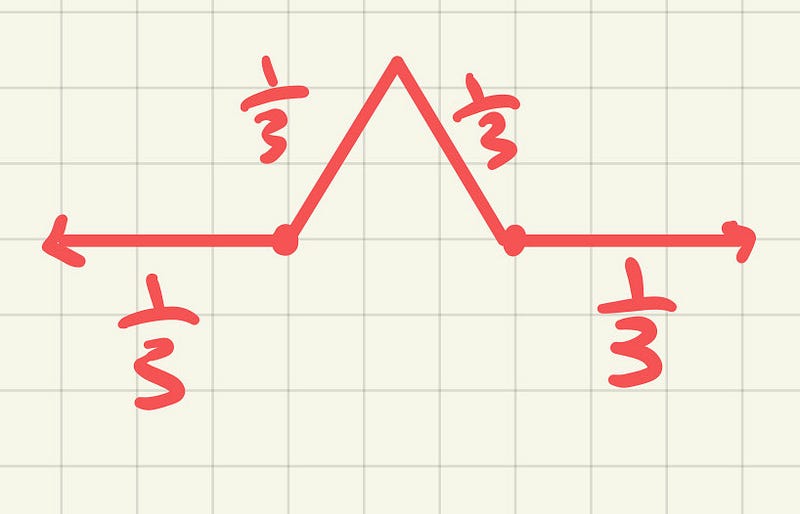
Notice at the start that the length of the side is 1. After one iteration, the length is now 4/3. We only have to consider one particular edge of our triangle because we do the same process to the other two edges.
As there are 3 sides, the perimeter after the first iteration is
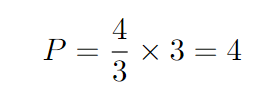
We will repeat the process one more time to find a pattern.
Dividing up the edges and adding triangles, we have
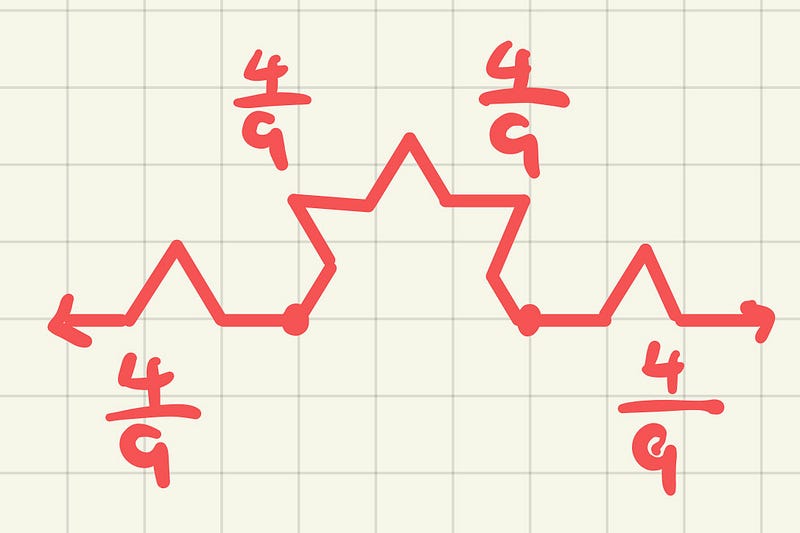
As we can see there are 4 lots of 4/9s, as there are two other sides that have undergone this process, the perimeter is now
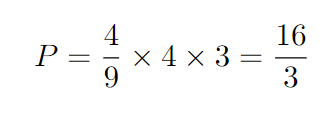
However, we are interested in the perimeter as the number of iterations goes to infinity.
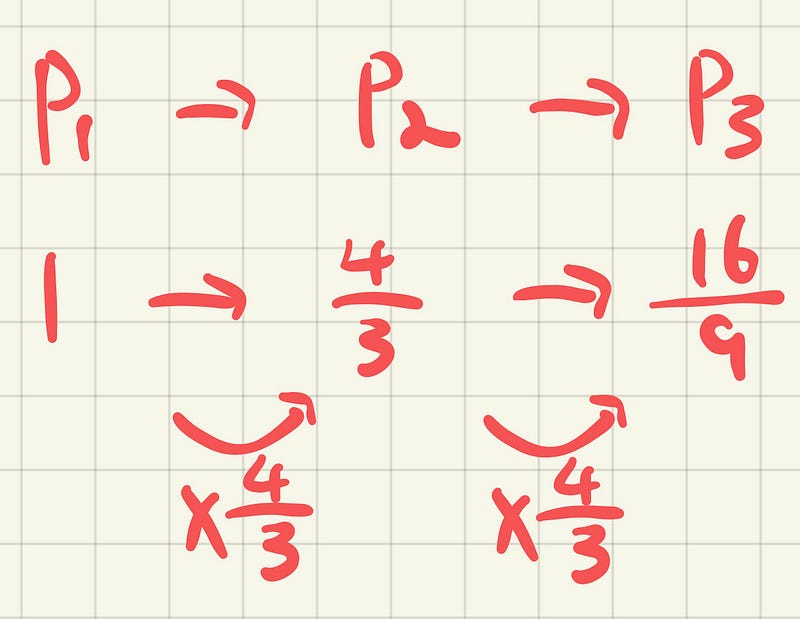
As we can see, the perimeter at each stage seems to be multiplied by 4/3.
Why is that? Let’s think about this carefully.
What we are essentially doing is dividing each side by 3, removing the middle piece and adding in two more sides. This is equivalent to taking an original line which had 3 equal sides and replacing it with 4 equal sides. That’s why we multiply by 4/3.
And because we are doing the same thing at every step, the exact same reasoning applies. In general, the perimeter is multiplied by 4/3 at each step.
Therefore, our total perimeter is when n goes to infinity
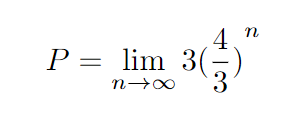
Plotting this function, we see that
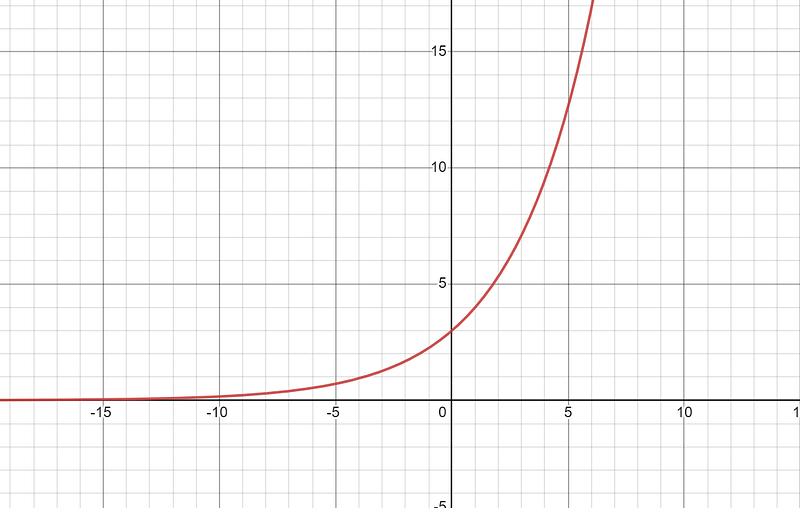
The function, therefore, increases without bound, in other words, it diverges.
The perimeter of the Koch snowflake is therefore infinity!
Well done!